Showing posts with label message boards. Show all posts

Saturday, October 11, 2014

You're Doing It Wrong: Protobird Toys Edition

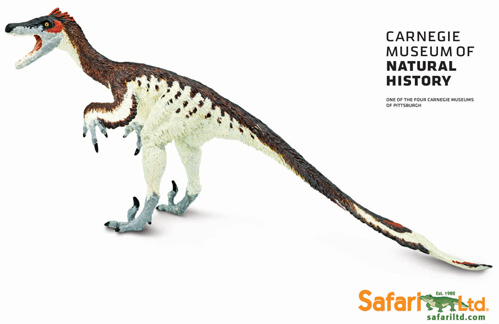
The new Carnegie Velociraptor figure.
I'm pretty slack when it comes to keeping up with my Twitter account, but if one thing can get me to break my one post per month general rule, it's "somebody is wrong on the Internet!" Or, in this case, "somebody made an inaccurate dinosaur model under the auspices of museum-approved accuracy!"

Let me preface this post with a few disclaimers. One, I have no problem with people making dinosaur art however they like. But I feel it's very important to draw a distinction between dinosaur art in general and paleoart. Creating a drawing, painting, or sculpture under the guise of paleoart implies that some degree of research went into the piece. When evaluating paleoart, critics are completely entitled to demand as rigorous an approach to accuracy as the evidence allows. Of course, speculation must be included to some degree, but the baseline expectation is always that basic facts and plausible inference will be taken into consideration.

Dinosaur art is a for of pop art, a purely artistic expression. Paleoart is a representation of a scientific hypothesis about the life appearance and behavior of an extinct organism.

This recent Twitter kerfuffle was due specifically to the debut of a new dinosaur figure in the Carnegie Collection produced by Safari Ltd. I've been a big fan of the Carnegie figures (and the sometimes nicer quality Wild Safari sister series) since I was a wee lad buying my first Carnegie Pteranodon in a little hobby shop for about $2, and pining over their massive Brachiosaurus. Carnegie figures have obvious appeal for scientifically-minded young dinosaur fans. First, most of them are made with a consistent scale (usually 1:40), so when you line them all up you can see how big each animal was compared to one another. Second, they are marketed as having the highest level of scientific authority: the Carnegie Museum stamp and assurances that hey are approved by actual paleontologists gives them the weight of authority and accuracy not found in many other toy lines. Sure, many of the older figures, including my Pteranodon, are now sorely out of date, but this is due largely to the Science Marches On effect rather than a basic, original inaccuracy.

However, like many paleoartists, the sculptors at Carnegie and related accuracy-minded/marketed toy lines seem to be having, well, let's say a little trouble adapting to the feathered revolution. Trained in the '80s and '90s drawing and sculpting Paulian, reptilian dinosaurs, it's been a steep learning curve for many of these artists to switch to bird-like, feathered dinosaurs, which many artists don't even realize requires a crash course in avian anatomy, rather than reptile or mammal anatomy, to get right. This is why expert consultants are so important in these projects--artists simply need help catching up with the latest research. Unfortunately, they're usually getting bad advice from "experts" who simply do not care.

The newest entry in the Carnegie Collection is the old favorite Velociraptor. Carnegie had previously released a scaly Velociraptor, but like many of their other models, they have commendably updated it to try and reflect current science. Unfortunately, it seems they mainly achieved this by slapping feathers over the basic original model with no regard for the fact that feathers inherently change the entire presentation and outline of an animal. Unlike fur or "protofeathers", which just fluff up the outline of an animal, feathers are more like a mobile exoskeleton that re-defines the entire body.

My own hypothesis, based on fossil and phylogenetic evidence as well as
inference from living analogues, about the life appearance of Velociraptor.
That being said, the Carnegie Velociraptor is not that bad overall and is very nicely sculpted, with an interesting and plausible color scheme. The feathers look fur-like, true, but this is not unprecedented among different lineages of large ground birds, and so is not unlikely in flightless protobirds (though they'd probably still be longer). The main problem here is the wing. Yes, wing. Like chickens and ostriches, protobirds possessed fully-fledged wings despite being flightless or nearly so, and retaining large claws on the fingers (yes, chickens, ostriches, and many other birds have hand claws--they are not some prehistoric protobird relic!).

Specifically, the wings in the new Velociraptor figure are very small, with short feathers, and are present only on the forearm, not the hand, making them only half a wing--literally, since they're issuing the primary feathers. We do not have direct evidence of primaries, but we have never found a single example of a maniraptoran that has secondaries but not primaries, and so it should be assumed they were there by default. As for secondaries, we have direct evidence in the form of quill knobs for this species. Quill knobs are not found in all feathered animals, let alone all flying birds, and seem to be associated with strong attachment either due to high-stresses during flight or other flapping behavior and/or especially large/long individual feathers.

Long story short: Not only did Velociraptor have wings, it probably had larger wings than many other dromaeosaurids. AFAIK not even Microraptor and Archaeopteryx had quill knobs to support their wings.

The new Carnegie figure, on the other hand, barely has wings at all. What went wrong?

Some insight can be gained by a recent series of incidents involving sculptor Dan LoRusso on the message board of the Dinosaur Toy Blog. LoRusso Is an amazing artist and is responsible for some of my all-time favorite dinosaur figures released in the Boston Museum of Science Collection by Battat (now being re-released with updates and new figures under the Terra brand). Collectors were understandably excited about the fact that the Battat series was coming back after nearly two decades, though the excitement was dampened a little by some obvious accuracy issues in the new figures, specifically when it came to the feathered species (or species that should have been feathered).

LoRusso was criticized online for producing a very well done but very inaccurate therizinosaur figure which completely lacked feathers. It would have fit right in with the excellent quality and Paulian style of the original series... back in 1994. But in 2014, when we have incontrovertible proof that therizinosaurs were not only feathered but that at least smaller species were very densely feathered, it is simply bizarre to see a featherless figure in a line that is being marketed as scientifically accurate. LoRusso stated that his consultants told him larger therizinosaurs would have been featherless. It's not LoRusso's fault that he somehow was able to sculpt a bald maniraptoran in the year 2013. Somebody who did not know what they were talking about and claiming to be an expert in paleoart just because they work in the related field of paleontology told him to do it, and he very reasonably believed them because they were an "expert", though obviously they had misrepresented themselves.

And there's the biggest problem and probably the answer to the question of what is going on with these strange and obvious inaccuracies. Paleoart consultants for major projects tend to be, often but not always, simply terrible. They seem not to know what they are talking about. Not only that, but second-hand reports suggest that they often simply do not care. Seriously: When asked about blatant inaccuracies creeping into paleoart-based projects like toys or books or even press releases, at least one anonymous paid paleontological consultant stated that they don't care what dinosaurs looked like in life, and so would presumably rubber-stamp any abomination that came across their desk.
Here's a prime, objective example: The Carnegie Collection Caudipteryx zoui figure. This species was first found in 1998, a complete skeleton with feather impressions. There are plenty of photos of Caudipteryx fossils that show crystal clear how the feathers attach and were ignored completely for this figure. The artist might have copied some inaccurate depiction rather than doing actual research or glancing at a fossil, and the consultant approved it because they didn't know or didn't care about the relevant details. The Carnegie Caudipteryx proves that consultants are utterly useless and often have no clue what they're talking about. Any one of us can compare the model with the fossil and show that the model is objectively wrong in major details. Look for yourself:

Caudipteryx wing fossil: note the primaries, longer than the hand, anchored along the second finger,
and lack of a clawed third finger.


Carnegie Collection Caudipteryx figure. Note the wing feathers anchored everywhere along the arm
EXCEPT on the second finger where they belong, and the incorrect number of fingers.
The wings/arms of this figure are wrong in just about every single way possible, and these are not minor details. Yet it's marketed as accurate and "paleontologist approved" in a series bearing the name of a major scientific institution!

It's not fair to ask all working paleontologists to know or care how their research into fossils translates into life appearance. Matching osteological and behavioral correlates with the structure and anatomy of living analogues could almost be considered a distinct field separate from actual paleontology. This is something paleoartists can and do think about and research constantly, but would almost never need to enter into the research when describing fossils. There's really no reason for working paleontologists to keep up to date with developments and research that go into paleoart.

The solution? Don't ask these paleontologists to consult! Just because someone is a paleontologist does not make them an expert on the life appearance of any given species of prehistoric organism. The examples cited above were, allegedly, all approved by "expert" consultants. This simply proves the consultants that are being employed are utterly failing at their job. I hate to say it, but there are legions of paleoartists and other dinosaur fans online who jump at the chance to criticize and nitpick and otherwise consult on these things for free. It's just that by the time the product is released, it's too late to do anything about inaccuracies. If companies that use paleoart would simply post concept art beforehand on, say, Facebook, they could probably get much better advice for free. Or, preferably, they could employ actual paleoartists as experts, hopefully artists who specialize in researching the life appearance of a given subject group of organisms.

Darren Naish, Mark Witton, and John Conway recently published an article on the (shameful) state of  paleoart as used in professional and commercial contexts. Companies like Safari Ltd. would do well to listen to their advice.

Wednesday, June 2, 2010

Kayentavenator lives!


Took long enough eh?

Congrats to old forum friend Rob Gay on finally seeing his baby hit print. You may know Rob for his work on cannibalism (or lack thereof) in Coelophysis. But those of you old-guard denizens of paleontology-related forums may know him better as Guy Stabbing a Pineapple. (See portrait to the left: Rob is on the right.)

Rob helped create a very early piece of DinoGoss by leaking his own planned name for this new find on a private forum. Kayentavenator elysiae is named for the Kayenta Formation, where it was found, and for Rob's now-wife. It's a potential basal tetanuran, though some have already cast doubt on that interpretation. I'm still working on getting the paper so details will have to be left to other blogs for now. I'll leave you with this 2005 entry in my Hallucinogene series of comic-style paleo-art depicting Kayentavenator looking over a stylized southwestern landscape.


Wednesday, August 26, 2009

The Colour and the Shape

Above: Iridescent Peacock feather, from Flickr. A new study shows that patterns, iridescence and even color can be preserved in fossil feathers.

Every dinosaur picture book aimed at kids comes with a disclaimer /slash/ incentive: "We don't really know what colors dinosaurs were." They were often depicted as green and drab, camouflage suited to their 1930s-era stint as lethargic reptilian swamp dwellers. But, the kid's books tantalizingly continue, "they could have been any color, with any pattern, even bright fuscha with purple polka dots!" (I'm guessing these books are to blame for Barney...).

Well, that's mostly true. We now know dinosaurs are more closely related to birds than modern reptiles (and lets not sell those short, many are very brightly colored). Birds have excellent color vision, and often employ bright colors and striking patterns to attract mates. Some artists have taken this concept to the extreme: See the almost day-glo colors employed by Luis Rey. All of this falls within artistic license, though even this bastion of dinosaur mysteries may disappear for some species. Actually, color can be preserved in fossils, and several recent studies have applied this to fossilized feathers, like those found on some dinosaurs.

Above: One of the iridescent feathers studied by Prum and colleagues in the new paper, discussed below. From National Geographic.

Fossils preserving life body patterns or even color are not new. Many fossilized fish and insects have preserved patterning or even hints of iridescence in their wings, shells, and scales. At least one ammonite fossil is even said to preserve the original, blood red coloration, possibly indicating a deep-sea habitat due to similar color in modern animals from that environment.

A new technique has been developed to help determine if color patterns are real or due to preservation. A 2008 paper by Jakob Vinther and colleagues described looking at apparently patterned fossil feathers under a microscope, looking for (and finding) melanosomes, the remnants of pigment present in life. The traditional view held that most fossil feathers which are preserved as dark 'stains' in a halo around the fossil are caused by bacteria, which cover the feathers as they decay. Vinther and colleagues found fault with that interpretation, though. For example, some fossil feathers show both dark and light bands in regular patterns. Why would bacteria only be present in such regular segments of fossil feathers? Vinther reckoned that rather than bacteria, the small nodules associated with these bands and dark spots (seen under a microscope) were pigment cells, and represented the actual dark/light patterning (though not the specific color) that would have been present in the living animal. Vinther and colleagues concluded that in fact almost all fossil feathers are preserved this way.

Above: Figure 1 from Vinther et al. 2008, showing melanosomes preserved in a banded fossil feather.

That's not to say that feathers lacking a dark carbon film lacked melanin in life--further examination is needed. For example, most specimens of Archaeopteryx do not preserve dark, stained feather impressions. Does this mean the feathers were white? No--in fact, close examination shows impressions where melanosomes would have been, but have since been lost or decayed away.

Still, this could have implications for the famous feathered dinosaur fossils from China. Many of these do preserve feathers as dark carbon stains (presumably caused in part by melanin), and do sometimes show a banded pattern. Such banding can be seen in the tail feathers of Caudipteryx. The "ring tailed" appearance of the holotype Sinosauropteryx tail is probably real, given an unpublished study by Nick Longrich and confirmation (via Dinoforum, of course) that the bands match up across both fossil slabs and so can't be an artifact of splitting the rock as originally suggested. Longrich also suggested that the apparent absence of feathers on the underside of Sinosauropteryx doesn't mean they weren't there, but rather that these feathers were white and did not leave a stain in the rock. Whether or not these feather patterns contain melanin is still an open question that, to my knowledge, nobody has really studied.
Above: Sinosauropteryx may have been counter-shaded, with a white belly and ringed tail. Image from a work in progress digital painting by Matt Martyniuk, all rights reserved.

So, we might actually know what kinds of patterns a few dinosaurs had in life, thanks to preservation of feathers and melanin. But what about actual colors? Well, a new study of melanin in fossil feathers (this time from the Eocene Messel deposits of Germany, home of Darwinius) has found that even traces of iridescence and life color can be recovered. In the future, more detailed study of dinosaur feathers might reveal something similar. A few barely-published specimens of Microraptor do have a very beautiful blue sheen to them (see photo above). Preservation artifact, or dromaeosaurid Blue Jays?

Luckily, formal evaluation of the feathered dinosaurs using this technique is in the pipeline. As co-author of the study Richard Prum told NatGeo, "We are eagerly hoping to be able to work on some of the Chinese dinosaur feathers to try to reconstruct the colors of the feathered dinosaurs." So, the days of drawing these dinosaurs with whatever day-glo magenta stripes you like may be over.
Above: Tail feathers of Microraptor specimen TNP0099624, from figure 2 in Xu et al. 2003. Could these show the color in life or iridescence? Future studies will find out.

And does anybody else remember that very old bit of goss from the DML about a Velociraptor specimen with associated feather proteins that could reveal the color...?

Friday, June 5, 2009

Tracy Ford and the Kingdom of the Embellished Skull

It's a catch-phrase for Indiana Jones and a rallying cry for paleontologists and archaeologists alike...

"It belongs in a museum!"

Unfortunately, there are plenty of private collectors out there who don't heed Indy's sage-like advice. Many important fossils are lost every year to private individuals who rarely disclose specimens to experts for study. Even if specimens in private hands are offered to experts, many refuse to publish on them, partly because they see it as simply unethical and partly because most important provenance data (what rocks formation the bones came from, etc.) has already been lost by that point.


Take the case of the Mongolian tyrannosaurid Alioramus. This dinosaur is officially known from only a single decently preserved skull, though several more complete skulls are known to exist in private collections, making them all but worthless to science unless the collectors bequeath them to museums in their wills later on. Mongolia is notorious for losing specimens to collectors, and apparently many, many excellent, potentially very important finds and new species will never become known to the public for this reason.

Back to Alioramus. One such 'lost' skull was recently sold at auction in New York to an undisclosed buyer for over US$200,000 (story here). Photos of this specimen were posted to the Dinosaur Mailing List after the auction finished (see DML post here for links to all the photos. One is reproduced above).

This seems like a tragic sale, because the skull appears to be beautifully complete, so it would be quite a loss for it to end up under a glass case in some millionaire's bedroom. I say would, because it looks like the joke's on him or her...

Often ignored in the sale of private specimens inaccessible to science is that they're inaccessible to science. That means that embellishments often added to black market fossils can't be caught by trained eyes. Now, at first glance, even most experts wouldn't notice the enhancements to the skull pictured above without studying the fossil up close. Enter Tracy Ford: the original armchair paleontologist, he has made a name for himself in offering a subscription-based online dinosaur database, as well as producing numerous publications on dinosaur life anatomy, books on how to draw dinosaurs, etc. Ford is also an active member of DinoForum, and noticed something very familiar about the auctioned-off Alioramus skull. He'd seen it before, at the infamous Tuscon Gem and Mineral Show. Tuscon is a Mecca for fossil collectors and under-the-table deals on shady specimens. The show regularly attracts even pros, who can often come across amazing new finds.

Ford had seen this very skull at the show, and, as he reported on DinoForum:
  • "I can saw with total confindance that this specimen is more than 80 percent reconstructed. The reason why I know this is that it was at the Tucson Rock Show about 3 or 4 years ago and I took several photo's of the specmen, which at the time was just the premaxilla, maxilla and tip of the dentary. Nether of the bones complete. So, just to get it sold they reconstructed it into its current state. Not as good as they claim it to be."
Others were astounded that someone would pay over 200 grand for a specimen that hadn't been checked for reconstruction or forgery. "Completing" partial skulls is common even in museums when prepping specimens for display, but you'd reckon this would significantly decrease the value of a specimen at auction, and I'd be very surprised if the buyer knew that only the ends of the jaws were composed of real bone. Here's a photo Ford took of the specimen years ago in Tuscon. Worth $200,000? You be the judge.

Tuesday, May 19, 2009

Four Wings Bad, Two Wings Good?

While helping to review a painting of Velociraptor posted to Gondolend, the artist brought up an outdated drawing of Sinornithosaurus she'd found among the top hits on Google, showing generally poor drawing skills and a likely inaccurate frond-tail of feather extending all the way to the hip (dromaeosaurs all seem to have had only a spray of vaned feathers at the tip of the tail, the rest being covered in down). This drawing is one of mine. As I've been updating my web site, I figured Sinornithosaurus should go to the top of the list for things to take a second stab at illustrating.

But how? In his book Dinosaurs of the Air, Greg Paul gave his sinornithosaurs something no fossils of them preserve--Microraptor-like wings on the back legs. It's a close relative of Microraptor, sure, but why do this with no evidence? In the travelling Feathered Dinosaurs exhibit I was lucky enough to see at the AMNH, the Liaoning diorama also contained a sinornithosaur with small, microraptorian hind wings. I checked the fossils again. Was I missing something? It seemed like a consensus was emerging with no published evidence. Sounds like some juicy behind the scenes goss was at work here.

It was. I present to you an unpublished specimen (NGMC 00-12-A, from Ji's thesis) of Sinornithosaurus (EDIT: Or is it a large, old Microraptor? See Mickey Mortimer's comments below) with what looks to be small wings on the hind legs.
Not only that, but as predicted by GSP and the AMNH model, it also appears to have full wings with primary (not just secondary as suggested by the preservation of the "Dave" specimen) wing feathers.

But... is it real? A few posters to DinoForum have admitted tentative wariness about even the hind-wing sporting Microraptor. After all, portions of the published Micro specimens are known to have been, ah, "enhanced" to make them more appealing to fossil collectors on the secondary fossil market (which is like half the Chinese economy and is only illegal in name). Sure, many specimens of Microraptor have been found with hind wings, but only two have been published on, and all came from private collectors. Specimens dug up by pros have lacked this feature, but are also more poorly preserved.

In the photo above, you can see that the feathered portion of the leg is on a separate piece of rock from the rest. Granted, specimens like this, at this size, are generally pretty fragmented, but it also gives fakers leeway to swap pieces in and out in order to make the piece more attractive. This practice isn't necessarily malicious, the enhancers just want to create a more artistic piece with no concern for science. Nor is it limited to China (remember Irritator? It got that name for a reason). Still, it's very prevalent there, to the point where many "museums" (mostly private collections that admit the public like the old Cabinets of Curiosity) contain mostly faked fossils. Professional museums in China, like the IVPP, are mainly clean from what I've heard. The pros are aware of this problem and I'd like to think most specimens that hit press are properly vetted, especially in the aftermath of Archaeoraptor. But when it comes to unpublished specimens, all bets are off, so be careful out there, paleoartists!

Long story short, I'll be re-illustrating Sinornithosaurus, but the hind wings will go in a separate layer, just in case...

[Top image: Very old, outdated Sinornithosaurus drawing by yours truly. All rights reserved.]
[second image from top: Sinornithosaurus by FunkMonk, lisenced.]

Tuesday, May 12, 2009

The Story of Lori

The origin of birds has always been a dicey subject. If you define "bird" as the clade including Archaeopteryx and modern species, as most paleonotolgists currently do, then the Late Jurassic Archaeopteryx ("Archie"--all the really cool and/or important fossils need a good nickname!) has always been the first bird, and because of the definition, probably always will be unless some of it's very close cousins are ever unearthed. The problem is that the closest supposed relatives of birds, the deinonychosaurs ("raptors" and relatives) should naturally pre-date Archie, if they're generally ancestral to it. Unfortunately, fossils from this group come almost exclusively from the Cretaceous period, well after Archie went extinct. The dwindling bird-are-not-dinosaurs crowd (BANDits) has historically seized on this as an attempted "gotcha" to rational human beings. After all, if birds evolved from dinosaurs, how come all the bird-like dinosaurs lived after the first birds?

It's true that the fossil record of pre-Archie maniraptorans is pretty slim, but paleontologists infer they must exist based on ghost lineages (see previous post on this topic). In that previous post, I mentioned the case of "Lori", the pre-publication nickname Scott Hartman has given to his (wait for it) Late Jurassic troodontid! Found in the Morrison Formation (not exactly known for its small dinosaur preservation, its more of an 8-foot vertebrae kinda spot), Lori would have lived at roughly the same time as Archaeopteryx, not early enough to be ancestral, but still enough to shoot down the old ghost lineage problem pretty thoroughly.

Scott (pic at right) first started discussing this find in more private venues like Gondolend, but it's safe to say the goss has spread far and wide in the years since then. He's provided some of us with an exclusive sneak peak at his own skeletals (he's pretty much a skeletal illustration guru, check out his awesome Web site), but the years have gone by and Lori has still not seen print nor a proper name.

Well, inside sources have sent the goss stunning evidence that a name has indeed been chosen, and possibly, that an official publication is getting close (it appears to be a cladogram for the paper, with the old Lori skeletal clearly labelled with its shiny new genus name). Far be it from me to leak the name pre-pub and risk creating sticky nomen nudum situations (I'm sure Scott doesn't envy Jim Jensen), but rest assured it preserves a traditional troodontid naming convention, as well as bearing some similarity to a recent dromaeosaurid name.

I wanted to post some of the great reconstructions of Lori that have already been produced and shared by members of the private boards where it's a well-known subject, but I can't seem to find any online. Scott is a pretty active member of these communities so it's only natural people are showing his find a little more discretion than would be normal for exciting, unpublished dinosaurs. I feel the same way, so the censored clipping of my source is all you're getting out of me. I'm sure a 3-year backlog of killer illustrations will appear out of the woodwork once it's officially published (didn't we even do a Lori draw-off at some point?) so as Tom Holtz would say, W4TP...

(pic above right: Jim Jensen with his Ultrasauros. He probably would have preferred to use a 'u' at the end there instead of an 'o', but the goss got a little out of hand).

Wednesday, March 11, 2009

"They look like big, good, strong hands, don't they?"


Just popping in to report on the ongoing saga of the new Deinocheirus specimen(s?).

For those who haven't been keeping up, rumors of one or more new finds from this age-old dino mystery have been swirling for a few months now. While a new find was whispered of over a year ago, the real action didn't start until Michael Ryan posted on his blog regarding Phil Currie's re-discovery of the original quarry where the infamous "terrible hands" and their adjoining titanic arms were first found in the late 1960s. He ended the short post with the tantalizing statement that they'd found more of the skeleton.

[Reconstruction of Deinocheirus as an ornithomimid by Wikipedia illustrator and DinoForum member known as FunkMonk, some rights reserved. More on this image below]

As a child of the '80s, and thanks to any number of old dinosaur books for kids, Deinocheirus stands out at THE mystery dinosaur. Gigantic, clawed arms of a predatory dinosaur larger than anything else like them by an order of magnitude. What kind of creature could these possibly have belonged to? The imagination runs wild.

Thanks to phylogenetic studies done in the 1990s and 2000s, most paleontologists have concluded that it was probably a gigantic ornithomid, or "ostrich dinosaur," though just what a 40ft ornithomimid would look like and what kind of specialised adaptations it must have had remain a mystery.

Well, a mystery to most. I brought up Ryan's blog post at DinoForum last November to fish for clues. And boy did I get them. Several people posted tortured cries of "wait for the paper." I can't imagine the Machiavellian pleasure people must take in knowing the answer to such a compelling and long-standing mystery and not being able to talk about it. They must feel like the creators of Lost.

Most people couldn't resist posting more clues, or teaser answers to questions in that thread. T. Mike Keesey of Dinosauricon fame knows what it is. Is it a giant ornithomid, or something more? Says Keesey: "Oh, it's more." Keesey also dropped the bomb that the find in the original quarry was NOT the one he was thinking of. More than one Deinocheirus? A new member of the deinocheirid family? Something else? Somebody knows what it is. Somebody knows. Ok, now I'm just sounding like the creepy ginger guy from Watchmen. Anyway, more rumors from those in the know suggested that, while Currie and Ryan's site had turned up new remains, they weren't much. The other new find, however, seemed to be something much more complete.

By the end of January, Scott Hartman weighed in... by laughing at us poor blind plebs. Openly mocking our futile attempts at solving the puzzle. Yup, creators of Lost all right.

But, today, another solid clue, perhaps the most solid yet. Not a clue: an answer.

FunkMonk (mentioned above, sorry, don't know your real name dude) had posted a thread for critiques of his artwork a while back, also at DinoForum. Now the subject of his Deinocheirus has come up again. Scott Hartman reckoned a giant ornithomimid should be more graviportal (with heavy and stout limbs, unlike the lithe form of small, fast ornithomimds). But, it was an old thread, and the picture was done before rumors of the new find(s), and Keesey's implication that it might not be an ornithomimid. Funk didn't want to put more effort into a drawing that might be completely off base. Well, someone came along and put that one to rest.

"It's an ornithomimid."

Stay tuned, gosshounds, as the saga continues to unfold!

[Photo: cast of the currently-known Deinocheirus specimen from Wikipedia, some rights reserved.]