Showing posts with label rumors. Show all posts

Saturday, October 11, 2014

You're Doing It Wrong: Protobird Toys Edition

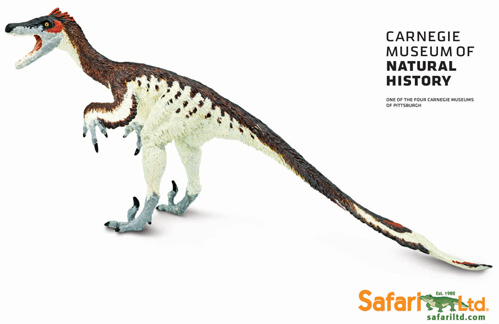
The new Carnegie Velociraptor figure.
I'm pretty slack when it comes to keeping up with my Twitter account, but if one thing can get me to break my one post per month general rule, it's "somebody is wrong on the Internet!" Or, in this case, "somebody made an inaccurate dinosaur model under the auspices of museum-approved accuracy!"

Let me preface this post with a few disclaimers. One, I have no problem with people making dinosaur art however they like. But I feel it's very important to draw a distinction between dinosaur art in general and paleoart. Creating a drawing, painting, or sculpture under the guise of paleoart implies that some degree of research went into the piece. When evaluating paleoart, critics are completely entitled to demand as rigorous an approach to accuracy as the evidence allows. Of course, speculation must be included to some degree, but the baseline expectation is always that basic facts and plausible inference will be taken into consideration.

Dinosaur art is a for of pop art, a purely artistic expression. Paleoart is a representation of a scientific hypothesis about the life appearance and behavior of an extinct organism.

This recent Twitter kerfuffle was due specifically to the debut of a new dinosaur figure in the Carnegie Collection produced by Safari Ltd. I've been a big fan of the Carnegie figures (and the sometimes nicer quality Wild Safari sister series) since I was a wee lad buying my first Carnegie Pteranodon in a little hobby shop for about $2, and pining over their massive Brachiosaurus. Carnegie figures have obvious appeal for scientifically-minded young dinosaur fans. First, most of them are made with a consistent scale (usually 1:40), so when you line them all up you can see how big each animal was compared to one another. Second, they are marketed as having the highest level of scientific authority: the Carnegie Museum stamp and assurances that hey are approved by actual paleontologists gives them the weight of authority and accuracy not found in many other toy lines. Sure, many of the older figures, including my Pteranodon, are now sorely out of date, but this is due largely to the Science Marches On effect rather than a basic, original inaccuracy.

However, like many paleoartists, the sculptors at Carnegie and related accuracy-minded/marketed toy lines seem to be having, well, let's say a little trouble adapting to the feathered revolution. Trained in the '80s and '90s drawing and sculpting Paulian, reptilian dinosaurs, it's been a steep learning curve for many of these artists to switch to bird-like, feathered dinosaurs, which many artists don't even realize requires a crash course in avian anatomy, rather than reptile or mammal anatomy, to get right. This is why expert consultants are so important in these projects--artists simply need help catching up with the latest research. Unfortunately, they're usually getting bad advice from "experts" who simply do not care.

The newest entry in the Carnegie Collection is the old favorite Velociraptor. Carnegie had previously released a scaly Velociraptor, but like many of their other models, they have commendably updated it to try and reflect current science. Unfortunately, it seems they mainly achieved this by slapping feathers over the basic original model with no regard for the fact that feathers inherently change the entire presentation and outline of an animal. Unlike fur or "protofeathers", which just fluff up the outline of an animal, feathers are more like a mobile exoskeleton that re-defines the entire body.

My own hypothesis, based on fossil and phylogenetic evidence as well as
inference from living analogues, about the life appearance of Velociraptor.
That being said, the Carnegie Velociraptor is not that bad overall and is very nicely sculpted, with an interesting and plausible color scheme. The feathers look fur-like, true, but this is not unprecedented among different lineages of large ground birds, and so is not unlikely in flightless protobirds (though they'd probably still be longer). The main problem here is the wing. Yes, wing. Like chickens and ostriches, protobirds possessed fully-fledged wings despite being flightless or nearly so, and retaining large claws on the fingers (yes, chickens, ostriches, and many other birds have hand claws--they are not some prehistoric protobird relic!).

Specifically, the wings in the new Velociraptor figure are very small, with short feathers, and are present only on the forearm, not the hand, making them only half a wing--literally, since they're issuing the primary feathers. We do not have direct evidence of primaries, but we have never found a single example of a maniraptoran that has secondaries but not primaries, and so it should be assumed they were there by default. As for secondaries, we have direct evidence in the form of quill knobs for this species. Quill knobs are not found in all feathered animals, let alone all flying birds, and seem to be associated with strong attachment either due to high-stresses during flight or other flapping behavior and/or especially large/long individual feathers.

Long story short: Not only did Velociraptor have wings, it probably had larger wings than many other dromaeosaurids. AFAIK not even Microraptor and Archaeopteryx had quill knobs to support their wings.

The new Carnegie figure, on the other hand, barely has wings at all. What went wrong?

Some insight can be gained by a recent series of incidents involving sculptor Dan LoRusso on the message board of the Dinosaur Toy Blog. LoRusso Is an amazing artist and is responsible for some of my all-time favorite dinosaur figures released in the Boston Museum of Science Collection by Battat (now being re-released with updates and new figures under the Terra brand). Collectors were understandably excited about the fact that the Battat series was coming back after nearly two decades, though the excitement was dampened a little by some obvious accuracy issues in the new figures, specifically when it came to the feathered species (or species that should have been feathered).

LoRusso was criticized online for producing a very well done but very inaccurate therizinosaur figure which completely lacked feathers. It would have fit right in with the excellent quality and Paulian style of the original series... back in 1994. But in 2014, when we have incontrovertible proof that therizinosaurs were not only feathered but that at least smaller species were very densely feathered, it is simply bizarre to see a featherless figure in a line that is being marketed as scientifically accurate. LoRusso stated that his consultants told him larger therizinosaurs would have been featherless. It's not LoRusso's fault that he somehow was able to sculpt a bald maniraptoran in the year 2013. Somebody who did not know what they were talking about and claiming to be an expert in paleoart just because they work in the related field of paleontology told him to do it, and he very reasonably believed them because they were an "expert", though obviously they had misrepresented themselves.

And there's the biggest problem and probably the answer to the question of what is going on with these strange and obvious inaccuracies. Paleoart consultants for major projects tend to be, often but not always, simply terrible. They seem not to know what they are talking about. Not only that, but second-hand reports suggest that they often simply do not care. Seriously: When asked about blatant inaccuracies creeping into paleoart-based projects like toys or books or even press releases, at least one anonymous paid paleontological consultant stated that they don't care what dinosaurs looked like in life, and so would presumably rubber-stamp any abomination that came across their desk.
Here's a prime, objective example: The Carnegie Collection Caudipteryx zoui figure. This species was first found in 1998, a complete skeleton with feather impressions. There are plenty of photos of Caudipteryx fossils that show crystal clear how the feathers attach and were ignored completely for this figure. The artist might have copied some inaccurate depiction rather than doing actual research or glancing at a fossil, and the consultant approved it because they didn't know or didn't care about the relevant details. The Carnegie Caudipteryx proves that consultants are utterly useless and often have no clue what they're talking about. Any one of us can compare the model with the fossil and show that the model is objectively wrong in major details. Look for yourself:

Caudipteryx wing fossil: note the primaries, longer than the hand, anchored along the second finger,
and lack of a clawed third finger.


Carnegie Collection Caudipteryx figure. Note the wing feathers anchored everywhere along the arm
EXCEPT on the second finger where they belong, and the incorrect number of fingers.
The wings/arms of this figure are wrong in just about every single way possible, and these are not minor details. Yet it's marketed as accurate and "paleontologist approved" in a series bearing the name of a major scientific institution!

It's not fair to ask all working paleontologists to know or care how their research into fossils translates into life appearance. Matching osteological and behavioral correlates with the structure and anatomy of living analogues could almost be considered a distinct field separate from actual paleontology. This is something paleoartists can and do think about and research constantly, but would almost never need to enter into the research when describing fossils. There's really no reason for working paleontologists to keep up to date with developments and research that go into paleoart.

The solution? Don't ask these paleontologists to consult! Just because someone is a paleontologist does not make them an expert on the life appearance of any given species of prehistoric organism. The examples cited above were, allegedly, all approved by "expert" consultants. This simply proves the consultants that are being employed are utterly failing at their job. I hate to say it, but there are legions of paleoartists and other dinosaur fans online who jump at the chance to criticize and nitpick and otherwise consult on these things for free. It's just that by the time the product is released, it's too late to do anything about inaccuracies. If companies that use paleoart would simply post concept art beforehand on, say, Facebook, they could probably get much better advice for free. Or, preferably, they could employ actual paleoartists as experts, hopefully artists who specialize in researching the life appearance of a given subject group of organisms.

Darren Naish, Mark Witton, and John Conway recently published an article on the (shameful) state of  paleoart as used in professional and commercial contexts. Companies like Safari Ltd. would do well to listen to their advice.

Monday, August 19, 2013

Follow-Up: Judith River Formation = Oldman Formation

In a previous post, I hung my tentative re-identification of the holotype teeth of Deinodon horridus on a rough correlation between the Judith River and Oldman formations, the latter of which is more precisely dated and, more importantly, contains Daspletosaurus torosus, which is a candidate for the owner of Deinodon teeth.

While researching a different topic, I stumbled across a more definitive published correlation of these two formations I wasn't previously aware of. In their 2001 paper on the stratigraphy of the Two Medicine Formation, Horner et al. discuss the correlation of parts of that formation with the Judith River. Horner et al. note that the Judith River can be separated into two basic units divided by a disconformity, corresponding with a marine transgression (when the terrestrial ecosystem was swamped by the rising of the Western Interior Seaway, the sediments deposited by which appear to have been lost in this instance).

Helpfully, Horner et al. note that it is from the lower unit that Hay collected numerous dinosaur teeth which were later described by Leidy as the infamous tooth taxa such as Deinodon, Aublysodon, Trachodon, and Troodon. More helpful still, the paper provides a handy chart showing the arrangement of the strata and including points at which radiometric dates have been taken. The base of the lower Deinodon-bearing unit is dated at about 78 million years old. The next available date is from just above the disconformity (i.e. after the seaway had retreated again) and shows an age of 75.4 million years ago. That's narrowing it down, but there's no date from within the formation from just below the disconformity, which would give us an upper boundary for the Deinodon strata.

But, there's hope. Horner et al. note that Rogers (1998) suggested the disconformity itself probably correlates to around the Willow Creek Anticline in the middle Two Medicine Formation (which contains the famous Egg Mountain Maiasaura nesting site). This segment of the TMF has been dated to 76.7 Ma ago, which may give us a rough upper boundary for the age of Hay's fossil tooth collection.

So, based on this paper at least, it looks like Deinodon and friends were collected from rocks aged somewhere between 78 and 76.7 million years old. Which is about the same age range as the Oldman Formation to the north. So, Deinodon horridus and Daspletosaurus torosus did indeed live at about the same time and in the same region (there were no checkpoints at the US-Canadian border back then!), making it more likely that they represent the same species, and the possibility that Deinodon actually represents Gorgosaurus less likely.

Looks like I'm going to have to create a new tag for Arcane Biostratigraphy and Geology Stuff...

Oh, and somebody in the comments last time asked me to get into Trachodon. This is definitely a subject for a longer blog post, though I'm a bit less excited about it because I'm more pessimistic that it's identity is knowable. But maybe this new info can help us get started. I already mentioned that the Trachodon teeth appear to come from the same strata as Maiasaura (and it's well known that Trachodon's contemporary Troodon formosus is reported from Egg Mountain as well, though T. formosus is also reported from pretty much everywhere and everywhen else...). Could Maiasaura be Trachodon? Perhaps! But it could also be Brachylophosaurus, or maybe even Gryposaurus. And... there's been a rumor going around for a while now that Trachodon teeth are referable to Lambeosaurinae. Which lambeosauines are known from this time and place that could fit the bill? Both Parasaurolophus and Corythosaurus have been reported from the uppermost Oldman, though these may be too young. Hypacrosaurus sp. seems to have been contemporary with Maiasaura, so that could be it...

Yeah, you can see why I'm pessimistic. Tyrannosaurids are rare, and there tend to be only one or two species of tyrannosaurids present in any given ecosystem. Hadrosaurids are... the opposite.

References

Horner, J. R., Schmitt, J. G., Jackson, F., & Hanna, R. (2001). Bones and rocks of the Upper Cretaceous Two Medicine-Judith River clastic wedge complex, Montana. In Field trip guidebook, Society of Vertebrate Paleontology 61st Annual Meeting: Mesozoic and Cenozoic Paleontology in the Western Plains and Rocky Mountains. Museum of the Rockies Occasional Paper (Vol. 3, pp. 3-14).

Wednesday, December 21, 2011

Bruhathkayosaurus is Dead. Again.

 Above: Working sketches for a speculative B. matleyi reconstruction by Steve O'Connor. Click here for Steve's final drawing.

I don't know how common this knowledge is, but this is the first I've heard of it so humor me while I mourn the possibility of ever re-assessing the intriguingly large sauropod specimen known as Bruthathkayosaurus matleyi.

B. matleyi was known from fragmentary remains of the pelvis and limb bones found in the Tiruchirappalli district of Tamil Nadu, India. It was first described by Yadagiri and Ayyasami in 1989 as species of giant allosauroid. This classification was widely doubted online, but little follow-up work was ever done. The initial description is widely regarded as exceedingly poor in quality and not much can be discerned about the specimen due to poorly detailed drawings and insufficient text. Tom Holtz has even stated that "the hypothesis that this is no more than petrified wood has not been falsified yet to my satisfaction." However, Mickey Mortimer later noted that the tree trunk hypothesis "is questionable given the non-cylindrical bones preserved such as the ilium. Additionally, Chatterjee has personally examined the fossils, and while he has a bad record of misidentifying taxa, I give him enough credit to not confuse a tree for a limb bone."

Sankar Chatterjee did indeed apparently examine the material and told George Olshevsky and Tracy Ford that he believed it to be a titanosaur, as reported in 1999 here.

Holtz responded to these appeals by noting that "not all units are the Dinosaur Park or the Djadokhta. In some preservation is really, really, really crappy. You might get all sorts of authigenic growth on the fossils, or alteration of the original material. In outcrops like that, it isn't out of the question to be fooled into thinking bone is wood and vice versa, especially from simple surficial appearances. This is why a section of the fossil would help resolve if it is bone or wood." So, there's that. We'll now never be able to take that section.


While B. matleyi was a near-mythical celebrity among "semi-apocryphal gigapods", its legend loomed larger than (published) reality. While most online sources (such as the DML posts quoted above) had long since agreed that the specimen was probably a gigantic sauropod and not a gigantic carnosaur, no actual published reference to the species as a sauropod existed until five years ago (Krause et al. 2006).

And what a sauropod it was, maybe! Obviously with such a paltry footprint on the scientific literature, reliable size estimates for such a poorly described specimen are hard to come by. Luckily, some researchers have done the best they could with the available data and determined that, if B. matleyi was indeed a titanosaur with similar proportions to say, Argentinosaurus, it would have been very large indeed. Matt Wedel over at SV-POW has estimated the size of this animal in life at 139 tons. Mickey Mortimer has estimated its length at up to 34 meters. That would position it as one of the largest species of land animals ever, second only to Amphicoelias fragillimus, possibly.

And now, it appears that B. matleyi has suffered the same fate as its atlantosauroid rival for the record. In the comments at another SV-POW post about semi-apocryphal gigapods, Wedel reports that the type and only specimen of B. matleyi was at some point washed away in a flood.
UPDATE: Thanks to Fabrizio in the comments pointing out a source closer to the horse's mouth. Artist "palaeozoologist" at DeviantArt posted an apparent personal correspondance from Kumar Ayyasami last January, in which he reported that the specimen was lost in heavy rains several years ago. (There's some more discussion of the specimen and the author's publication record here, including the suggestion that Dr. Ayyasami may now be deceased--that is, if you can get past the inexplicable Ali G speak). So it sounds like not only was the specimen poorly described, but nobody had bothered to actually collect it from the field site in the ~15 years since its discovery, and it was (predictably and inevitably) lost to erosion.

Any hope of verifying the stupefying claims about this species' size now seem to be lost. And unlike A. fragilimus, which was described and well-illustrated by a mostly reputable source with no obvious errors, the poor state of the B. matleyi description will forever doom this creature to the realm of dubious claims. After all, given the poor state of the description, it seems possible that a simple scale bar error or other mix-up could have tainted the data, and therefore all of our size estimates.

So here's to Bruthathkayosaurus matleyi, a beast (or possibly, a tree?) that died 70 million years ago, raised its spectral head (or crown?) again for one tantalizing moment and then, like Hitchcock's Ornithichnites, sunk back beneath the earth before we could really learn anything about it.

Wednesday, April 6, 2011

April fools! A bit late but who's counting?

UPDATE!
This is a late-arriving April Fools joke. Got me!

Archaeocursor. The bahariasaurid (yes, new family) with feathers. Commence head explosions.

Paul C. Sereno, Oliver Rauhut, Xing Xu, Wang, Y., Zhu, T., Gao, X. & Gong, D. (2011). "Basalmost theropod with filamentous integumentary structures and new clade of basal 'carnivorous' dinosaurs". Kirtlandia 37: 82-113.

I haven't seen any discussion of this, save that it's been added to Wikipedia. Apparently from the Tiaojishan formation, the same beds that have yielded Anchiornis and Tianyulong. Also, note the scare quotes around "carnivorous." Could their proximity to Limusaurus mean bahariasaurids are partially or wholly herbivorous? Just idle speculation for now. More if/when I get my hands on this paper.

Sunday, September 5, 2010

What Is A Nomen Oblitum? Not What You Probably Think


Above: Illustration of Manospondylus gigas by Matt Martyniuk, copyright.

In a previous post, I brought up the taboo subject of Manospondylus gigas, the large Lancian theropod named by E.D. Cope in 1886 and a potential senior synonym of Tyrannosaurus rex. Google "manospondylus" and the first hit is an old Q&A post by Mike Taylor called "So why hasn't Tyrannosaurus been renamed Manospondylus?"

Good question!

Aside from cultural inertia, the answer Taylor gave is this: "As of 1st January 2000, a new ICZN ruling has come into effect, saying that a name that's been considered valid for fifty years can't now be replaced by one that's been considered invalid during that time." This is also the answer Mickey Mortimer gave in some (but not all) relevant entries on the current Theropod Database. Brian Switek, in an old Laelaps post, gave the same answer: Manospondylus hasn't been considered valid in 50 years, so it's a nomen oblitum ("forgotten name"). He also suggested that this means T. rex has "protected status" which would have to be overturned by the ICZN in order for M. gigas to become valid.

The problem is that none of that has any bearing on what "nomen oblitum" actually means according to the current ICZN code. The ICZN states that in order for a name to be declared a nomen oblitum, all of the following things need to be true:
1. the senior synonym or homonym has not been used as a valid name after 1899
2. the junior synonym or homonym has been used for a particular taxon, as its presumed valid name, in at least 25 works, published by at least 10 authors in the immediately preceding 50 years
3. a paper must be published citing evidence for #2, and citing both names together, declare that the junior synonym or homonym is being made a nomen protectum ("protected name") in accordance with ICZN article 23.9.

The confusion seems to come from #2. It's not a matter of the senior name not having been used in the past 50 years, but the junior name must have been used frequently enough in recent history in order to be eligible for conservation. Clearly, T. rex meets the second criteria. But what about the first and third?

For number one, the answer is I'm not sure, but I think so. It depends on what your definition if "is" is. Has Manospondylus been used since 1899? Definitely, yes, and in several papers, as Mickey Mortimer pointed out in the comments on my previous post on this topic. But was it used as valid? Most authors, even in the early 20th century, recognized that two vertebrae were pretty poor material to be basing a species on. Many of them considered it to be what we'd now call a nomen dubium ("dubious name"). For example, here's what Matthew & Brown (1922) had to say on the subject: "Osborn has already (1917) called attention to another fragmentary type, Manospondylus gigas, as possibly identical with Tyrannosaurus but based upon an inadequate type." They don't explicitly say it's valid or invalid (I'd like to know what Osborn 1917 actually aid on the matter but don't have that paper. Anyone?).

As for number three, it appears that the situation has never been adequately addressed in the literature, so the criterion is not satisfied. The issue came up in 2000, when Peter Larson claimed to have rediscovered the original Manospondylus locality, and more of the type specimen, confirming it is the same as T. rex. As far as I know, this has never seen print beyond an AP article (Anonymous, 2000. "Discovery could Endanger T.Rex Name." The Associated Press.)

In short, could M. gigas be a nomen oblitum? Maybe, depending on the meaning of "valid" and if somebody gets up the nerve to actually publish the case. Is Manospondylus a nomen oblitum as of right now? Definitely not, and it remains the valid senior synonym of Tyrannosaurus until and unless someone acts as revisor to the contrary.

Addendum: Just for fun, I looked up "valid" in the ICZN's glossary. Who better to determine what the ICZN means by valid than the ICZN? Here's the entry:
valid, a. (validity, n.) Of an available name or a nomenclatural act: one that is acceptable under the provisions of the Code and, in the case of a name, which is the correct name of a taxon in an author's taxonomic judgment.

Since the Code does not formally recognize nomina dubia as invalid names (or at all, really), this seems to indicate that M. gigas was considered valid by all those authors in the 20th century, at least under the ICZN's definition. Matthew and Brown, for example, did not consider M. gigas an invalid name (a junior homonym, improperly coined, etc.), just non-diagnostic. Which as far as the rules are concerned, is A-OK. Sorry kids, barring an act of ICZN, M. gigas looks like it's on solid footing as a currently valid name.

Tuesday, July 14, 2009

My Sauropod is Bigger

There is a new record holder for second-longest dinosaur, longest if you only count bones that currently exist. Skip past the long-winded intro if you want to get to the point!

New mounted skeleton of Mamenchisaurus, in Tokyo, the longest mounted dinosaur skeleton in the world. Image by Shiziuo Kambayashi from the AP.

What is it about pissing contests over the largest dinosaurs? Who cares if Spinosaurus is a few metres longer than Tyrannosaurus? Does it really matter which super long-necked, long tailed giant sauropod is slightly longer than its nearest competitor?

Of course it does!

Well not really, but it can be a fun part of armchair paleontology to keep track of these things. I created the Wikipedia article Dinosaur Size to try and help people keep tabs on this issue using peer-reviewed sources (though for a while there a few too many Internet sources were creeping in, but we've put a stop to that).

Now, everyone gets their shorts in a bunch over the biggest theropod, because even though sauropods are nearly always bigger, they're not the ones who will try to eat Jeff Goldblum. This is evidenced by the fact that one of the biggest theropods in terms of sheer mass, Therizinosaurus, is almost always ignored in these competitions because it was probably herbivorous and looked like a giant porcupine goose with a beer belly. However, despite how cool theropods may be (i.e., extremely cool), sauropods are without a doubt the group where we find the largest dinosaurs.

So which dinosaur was largest? Well, define large. Do you mean length, height, or mass? In modern animals, mass is usually what counts. The African elephant is considered the largest land animal, even though the giraffe is taller and the reticulated python is longer. The most massive, and therefore largest, dinosaur known from decent remains that still exist is a bit of a tie game right now. Traditionally, the largest sauropod known is cited as the titanosaur Argentinosaurus, with rational mass estimates ranging between 78 and 83 tonnes. However, several other titanosaurs were about the same size, if not bigger, including Puertasaurus and the horrifically named Futalognkosaurus (note that the official name even includes a misspelling, yikes!).


Scale diagram showing several of the largest dinosaurs discussed in this post. Green: Diplodocus. Orange: Supersaurus. Purple: Argentinosaurus. Blue: Sauroposeidon. Grey: Bruhathkayosaurus. Red: Amphicoelias. Scale bar = 40m. Image by Matt Martyniuk, licensed.

The new goss here though, to finally get to the reason for this post, is that the record for longest dinosaur has changed... sort of (see final paragraph, below). When I was a kid, I was enthralled by the longest known dinosaur according to several of my books, the "Seismosaurus" (earthquake lizard). This monster diplodocid (whip-tailed sauropod) was said to be over 130ft in length. Well, those initial estimates were a little too hopeful, and based on the mis-identification of a tail bone which threw the estimates off by up to 30%. More reasonable estimates place its total length at a mere 33.5m (110ft), and furthermore, it turned out to likely be just a slightly oversize specimen of Diplodocus anyway.

The downsizing of Seismo--er, Diplodocus left the length champion to its cousin, Supersaurus. As the preparation of a fairly complete skeleton nicknamed "Jimbo" by Scott Hartman showed, Supersaurus probably reached a total length of 34m, or 112ft, surpassing both Diplodocus and weight champion Argentinosaurus by a meter or two (in the process robbing the titanosaurs of their clear victory in both units of measure).

However, now a new champion emerges by a neck (I'll be here all weekend folks!). A new specimen of the mega-necked Chinese sauropod Mamenchisaurus unearthed in 2001 was initially reported as the largest of its kind at a respectable, but short, 30m (98ft). However, a surprise came when they assembled a reconstructed skeleton for a new exhibition opening in Tokyo: the specimen actually measures a whopping 35m long, or 115ft, beating out Supersaurus for the title of longest known dinosaur. See photo at top of this post.
Extraordinarily accurate (down to the scales) illustration on Mamenchisaurus by Steve OC, licensed.

That is, if you don't count Amphicoelias. This monster, known from a single partial vertebrae that was 8ft tall and would have been 12 if complete, was very similar to Diplodocus and, scaling up from the same bone in that animal, Amphi would have been at the very least 40m long (131ft) and probably in the area of 120 tons, easily trumping all other contenders in every category: length, weight, and height (read the Wiki I started and wrote most of on Amphi here). So far the only contender to that throne is the even more dubious Bruhathkayosaurus, which is known from a poorly preserved, poorly published, and basically never studied leg bone sometimes thought to be a tree trunk, and even if the size the describers said it was is probably vastly overestimated in published surveys. For now, Amphi is the king, but its smaller cousins with better remains are inching closer.

Tuesday, May 12, 2009

The Story of Lori

The origin of birds has always been a dicey subject. If you define "bird" as the clade including Archaeopteryx and modern species, as most paleonotolgists currently do, then the Late Jurassic Archaeopteryx ("Archie"--all the really cool and/or important fossils need a good nickname!) has always been the first bird, and because of the definition, probably always will be unless some of it's very close cousins are ever unearthed. The problem is that the closest supposed relatives of birds, the deinonychosaurs ("raptors" and relatives) should naturally pre-date Archie, if they're generally ancestral to it. Unfortunately, fossils from this group come almost exclusively from the Cretaceous period, well after Archie went extinct. The dwindling bird-are-not-dinosaurs crowd (BANDits) has historically seized on this as an attempted "gotcha" to rational human beings. After all, if birds evolved from dinosaurs, how come all the bird-like dinosaurs lived after the first birds?

It's true that the fossil record of pre-Archie maniraptorans is pretty slim, but paleontologists infer they must exist based on ghost lineages (see previous post on this topic). In that previous post, I mentioned the case of "Lori", the pre-publication nickname Scott Hartman has given to his (wait for it) Late Jurassic troodontid! Found in the Morrison Formation (not exactly known for its small dinosaur preservation, its more of an 8-foot vertebrae kinda spot), Lori would have lived at roughly the same time as Archaeopteryx, not early enough to be ancestral, but still enough to shoot down the old ghost lineage problem pretty thoroughly.

Scott (pic at right) first started discussing this find in more private venues like Gondolend, but it's safe to say the goss has spread far and wide in the years since then. He's provided some of us with an exclusive sneak peak at his own skeletals (he's pretty much a skeletal illustration guru, check out his awesome Web site), but the years have gone by and Lori has still not seen print nor a proper name.

Well, inside sources have sent the goss stunning evidence that a name has indeed been chosen, and possibly, that an official publication is getting close (it appears to be a cladogram for the paper, with the old Lori skeletal clearly labelled with its shiny new genus name). Far be it from me to leak the name pre-pub and risk creating sticky nomen nudum situations (I'm sure Scott doesn't envy Jim Jensen), but rest assured it preserves a traditional troodontid naming convention, as well as bearing some similarity to a recent dromaeosaurid name.

I wanted to post some of the great reconstructions of Lori that have already been produced and shared by members of the private boards where it's a well-known subject, but I can't seem to find any online. Scott is a pretty active member of these communities so it's only natural people are showing his find a little more discretion than would be normal for exciting, unpublished dinosaurs. I feel the same way, so the censored clipping of my source is all you're getting out of me. I'm sure a 3-year backlog of killer illustrations will appear out of the woodwork once it's officially published (didn't we even do a Lori draw-off at some point?) so as Tom Holtz would say, W4TP...

(pic above right: Jim Jensen with his Ultrasauros. He probably would have preferred to use a 'u' at the end there instead of an 'o', but the goss got a little out of hand).

Monday, April 6, 2009

What's In A Name? Brontosaurus Returns?

To elaborate on the previous story:
As you all probably know, the reason the name Brontosaurus was abandoned in the first place is that it turned out to be a subjective junior synonym of Apatosaurus. (NB: It was NOT because it was a chimera. The whole "wrong head" thing is a separate issue and overstated anyway. That head was a decent educated guess at the time!) Basically, Apato was named first, people decided they belonged to the same genus (note: not species), and so the name Brontosaurus was sunk since it was coined second.

[Image: Apatosaurus mount at the AMNH. According to he SV-POW goss mentioned previously, this will remain Apatosaurus even after Brontosaurus is resurrected. Photo by Erika & Shannon, from Wikipedia, some rights reserved.]

If you're really observant and know something about taxonomy, you can see why this was not an open and shut case or a definitely permanent change. First of all the synonymy was subjective, not objective. Apato and Bronto appeared to belong to the same genus, but were not named for the same exact specimen, so the synonymy was more of an opinion. Especially given that it was generic, not specific synonymy. When species get sunk, it tends to stick. Whether two species belong to the same genus, however, is entirely dependent on whether you're a lumper or a splitter. Tom Holtz coined the term "genericometer" for the mental device people use to demarcate genera, and to illustrate just how subjective it is. With a finely-tuned genericometer, every genus only has one species (often over-splitting taxa). Loosen the settings on yours, and suddenly Daspletosaurus torosus is looking a lot like it should get renamed Tyrannosaurus torosus (probably a case of over-lumping).

This whole business has been simplified somewhat by phylogenetic taxonomy. Broadly, when all taxa should also be clades, it's easy enough to split and lump based on relationships. Daspletosaurus is less closely related to Tyrannosaurus than a few other species, so if you lump one you must lump all (or else the taxon Tyrannosaurus would become polyphyletic, an unnatural grouping), which doesn't make much sense and is not very useful in communicating about dinosaurs.

[Image: Drawing of the Brontosaurus skeleton by O.C. Marsh, 1896. Public domain.]

On the other hand, Apatosaurus and Brontosaurus are each others closest relatives, so you're not leaving anything out by lumping them. It forms a natural group, so it makes sense.

Or do they form a natural group? When a new paper was published on Supersaurus in 2007, the authors pointed out that it shared many features with apatosaurs, and belonged to the clade Apatosaurinae. In an offhand way with little elaboration, they mentioned Supersaurus has some characters that link it to Apatosaurus louisae in particular. This is significant, since that's the non-Brontosaurus species. If Supersaurus is closer to A. louisae than to A. excelsus (aka Brontosaurus), that means Apatosaurus would not form a natural group unless Supersaurus was also sunk into Apatosaurus, which, like in the tyrannosaur example, makes little sense.

Word on the tubes is that this is exactly the case. Supersaurus is likely closer to Apatosaurus than either are to Brontosaurus, and that means Brontosaurus needs to be brought back as a valid name. Sources say exactly this is in the works now, and a new paper will show that Supersaurus does indeed split up the Apatosaurus band. Look for news media sources trumpeting the return of one of the most famous dino names ever in the next year or so.

Stay tuned for more Bronto- related news, Brontosaurus, and otherwise... (hint hint?).

Thursday, March 19, 2009

Fire up the BBQ, Fred Flintstone:

Hear that? There's like a rumbling on the horizon, a "suuwassa" if you will...

Brontosaurus is on it's way back.

At least, if the SV-POWers that be have anything to say about it.

Vague, tantalizing comments here.

[Image: Apatosaurus excelsus by ДиБгд from Wikipedia, modified by N.Tamura and M.Martyniuk, public domain.]

Tuesday, March 17, 2009

What's Coming Wednesday?


From the DML:
"As exciting as this week has already been with new dinosaur stories (e.g., Hesperonychus), I just want to put everyone on alert to keep an eyeball on Nature starting Wednesday afternoon for a breaking new dinosaur story, and believe me, you won't see it coming...!"

...or Thursday?
"Isn't this supposed to be coming out a little later? I recall the end of the embargo being set for the 19th."

Deinocheirus? Lori? Amphicoelias? Feathered brachiosaur? Stay tuned for coverage of this cryptic new goss as it unfolds!

Wednesday, March 11, 2009

"They look like big, good, strong hands, don't they?"


Just popping in to report on the ongoing saga of the new Deinocheirus specimen(s?).

For those who haven't been keeping up, rumors of one or more new finds from this age-old dino mystery have been swirling for a few months now. While a new find was whispered of over a year ago, the real action didn't start until Michael Ryan posted on his blog regarding Phil Currie's re-discovery of the original quarry where the infamous "terrible hands" and their adjoining titanic arms were first found in the late 1960s. He ended the short post with the tantalizing statement that they'd found more of the skeleton.

[Reconstruction of Deinocheirus as an ornithomimid by Wikipedia illustrator and DinoForum member known as FunkMonk, some rights reserved. More on this image below]

As a child of the '80s, and thanks to any number of old dinosaur books for kids, Deinocheirus stands out at THE mystery dinosaur. Gigantic, clawed arms of a predatory dinosaur larger than anything else like them by an order of magnitude. What kind of creature could these possibly have belonged to? The imagination runs wild.

Thanks to phylogenetic studies done in the 1990s and 2000s, most paleontologists have concluded that it was probably a gigantic ornithomid, or "ostrich dinosaur," though just what a 40ft ornithomimid would look like and what kind of specialised adaptations it must have had remain a mystery.

Well, a mystery to most. I brought up Ryan's blog post at DinoForum last November to fish for clues. And boy did I get them. Several people posted tortured cries of "wait for the paper." I can't imagine the Machiavellian pleasure people must take in knowing the answer to such a compelling and long-standing mystery and not being able to talk about it. They must feel like the creators of Lost.

Most people couldn't resist posting more clues, or teaser answers to questions in that thread. T. Mike Keesey of Dinosauricon fame knows what it is. Is it a giant ornithomid, or something more? Says Keesey: "Oh, it's more." Keesey also dropped the bomb that the find in the original quarry was NOT the one he was thinking of. More than one Deinocheirus? A new member of the deinocheirid family? Something else? Somebody knows what it is. Somebody knows. Ok, now I'm just sounding like the creepy ginger guy from Watchmen. Anyway, more rumors from those in the know suggested that, while Currie and Ryan's site had turned up new remains, they weren't much. The other new find, however, seemed to be something much more complete.

By the end of January, Scott Hartman weighed in... by laughing at us poor blind plebs. Openly mocking our futile attempts at solving the puzzle. Yup, creators of Lost all right.

But, today, another solid clue, perhaps the most solid yet. Not a clue: an answer.

FunkMonk (mentioned above, sorry, don't know your real name dude) had posted a thread for critiques of his artwork a while back, also at DinoForum. Now the subject of his Deinocheirus has come up again. Scott Hartman reckoned a giant ornithomimid should be more graviportal (with heavy and stout limbs, unlike the lithe form of small, fast ornithomimds). But, it was an old thread, and the picture was done before rumors of the new find(s), and Keesey's implication that it might not be an ornithomimid. Funk didn't want to put more effort into a drawing that might be completely off base. Well, someone came along and put that one to rest.

"It's an ornithomimid."

Stay tuned, gosshounds, as the saga continues to unfold!

[Photo: cast of the currently-known Deinocheirus specimen from Wikipedia, some rights reserved.]